

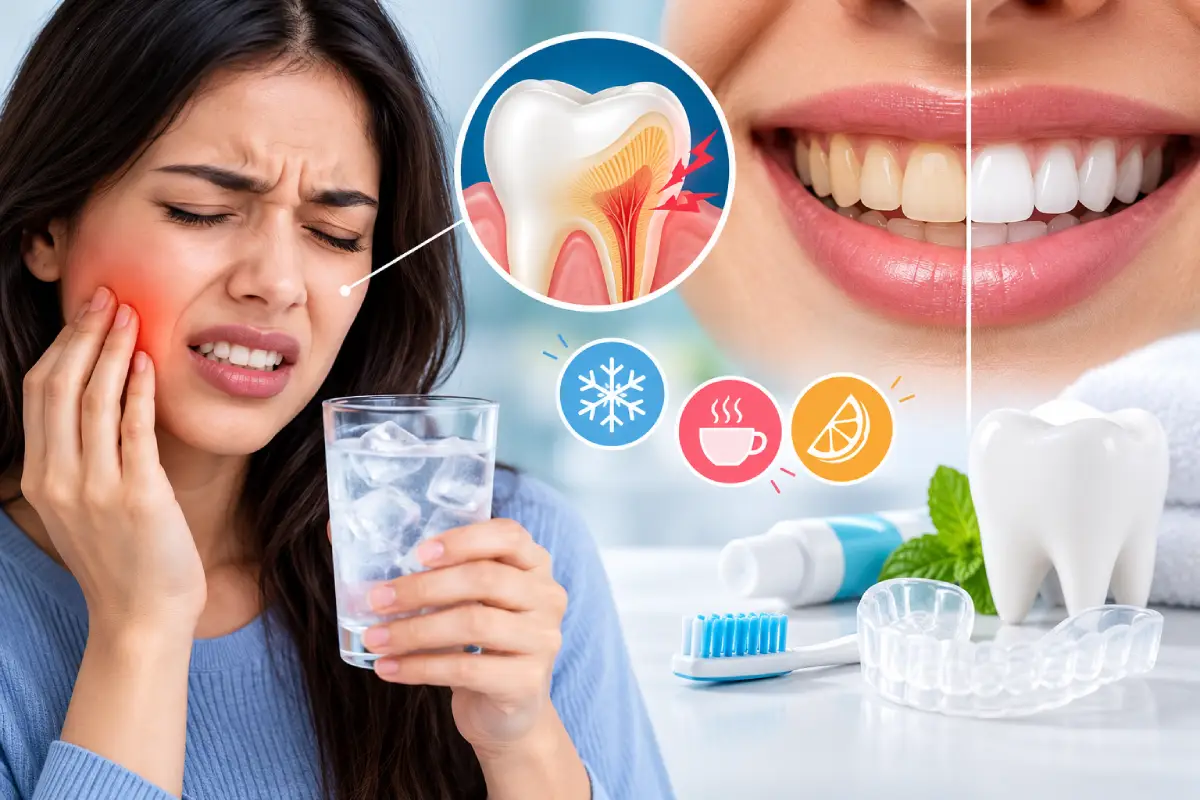
What Causes Teeth Whitening Sensitivity and How Can You Manage It? – Teeth whitening can make a noticeable difference in your smile, but it can also leave your teeth feeling more sensitive than usual. You might notice a sharp sensation when drinking cold water, eating ice cream, or breathing through your mouth on a chilly morning.
This discomfort is a common side effect of whitening treatments. It can happen with professional whitening, store-bought strips, and at-home whitening gels. Fortunately, the sensitivity is generally temporary, and there are ways to manage it without giving up on a brighter smile.
Understanding what causes teeth whitening sensitivity, how long it lasts, and what you can do to reduce discomfort can help you make informed decisions about your dental care.
Table of Contents
Why Does Teeth Whitening Cause Sensitivity?
Most whitening treatments contain hydrogen peroxide or carbamide peroxide. These ingredients penetrate the tooth’s outer layers and break down compounds responsible for discoloration.
While these ingredients help remove stains, they can also temporarily irritate the sensitive tissue inside your teeth. This irritation can make your teeth more responsive to temperature changes, particularly cold foods and drinks.
Several factors influence how much sensitivity you experience:
- Whitening strength: Higher concentrations of peroxide can increase the likelihood of sensitivity.
- Treatment duration: Leaving whitening products on longer than directed increases exposure to the active ingredients.
- Existing dental conditions: Cavities, exposed tooth roots, and worn enamel can contribute to sensitivity.
- Treatment frequency: Repeated whitening sessions without adequate breaks can increase discomfort.
Not everyone experiences the same reaction. Someone with healthy teeth and no history of sensitivity might feel little discomfort, while someone with exposed tooth roots could find whitening uncomfortable.
Before beginning treatment, a dental evaluation can help identify factors that could affect your experience. Patients exploring San Ramon teeth whitening services can discuss their sensitivity concerns with a dentist and determine whether in-office whitening or a supervised take-home treatment is appropriate.
How Long Does Sensitivity Last After Teeth Whitening?
For most people, whitening-related sensitivity resolves within a few days after treatment ends. Some experience discomfort immediately after a whitening session, while others notice it after several applications of an at-home product.
The duration depends on the whitening method, peroxide concentration, treatment frequency, and individual tooth sensitivity.
Professional whitening: Sensitivity can develop during or shortly after an appointment. It generally improves as the effects of the whitening agents wear off.
At-home whitening strips and trays: Discomfort can begin after several days of use, particularly when products are applied repeatedly. Taking a break can help reduce irritation.
Whitening toothpaste: These products primarily remove surface stains, although some contain peroxide. Certain formulations can contribute to discomfort, especially in people who already have sensitive teeth.
Sensitivity that continues, becomes worse, or affects one tooth more than the others deserves attention. Whitening is not the only possible explanation for tooth pain, and a dentist can check for cavities, cracks, or other underlying problems.
6 Ways to Reduce Sensitivity After Teeth Whitening
You do not have to ignore discomfort or push through painful whitening sessions. Small changes to your dental routine can make the experience more manageable.
1. Use Toothpaste Designed for Sensitive Teeth
Desensitizing toothpaste contains ingredients that help reduce sensitivity. Potassium nitrate helps calm nerve responses, while stannous fluoride can help protect sensitive areas of teeth.
Consider using a toothpaste formulated for sensitive teeth before beginning a whitening treatment, especially if you have experienced discomfort in the past.
Use it consistently according to the manufacturer’s instructions. Relief is not always immediate, and some formulas require regular use to produce noticeable results.
2. Take a Break Between Whitening Sessions
Continuing to whiten your teeth while they are sensitive can prolong discomfort.
If you develop sensitivity while using whitening strips or trays, stop treatment temporarily and consult your dentist or the product’s instructions before restarting.
Avoid increasing the recommended treatment time or applying additional gel to speed up your results. More whitening product does not necessarily mean better results, and excessive exposure can irritate your teeth and gums.
3. Avoid Extremely Hot or Cold Foods
Temperature changes can trigger sharp sensations when your teeth are sensitive.
For a short period after whitening, consider limiting:
- Ice water and frozen drinks
- Ice cream and frozen desserts
- Very hot coffee or tea
- Foods that are particularly uncomfortable to chew or swallow
Choose room-temperature water and allow hot foods to cool before eating.
These adjustments do not treat the underlying cause of sensitivity, but they can make everyday activities more comfortable while your teeth recover.
4. Brush Gently With a Soft-Bristled Toothbrush
Aggressive brushing can wear down tooth surfaces and irritate your gums, contributing to sensitivity over time.
Use a soft-bristled toothbrush and gentle pressure when cleaning your teeth. A fluoride toothpaste can also help protect your enamel.
Avoid using abrasive whitening powders or harsh DIY whitening mixtures to maintain your results. These products can damage tooth surfaces, especially when combined with forceful brushing.
Your regular brushing and flossing routine should continue, even if your teeth feel temporarily sensitive.
5. Ask Your Dentist About Fluoride or Desensitizing Treatments
If sensitivity interferes with eating or drinking, your dentist can recommend additional treatment.
Depending on the condition of your teeth, options could include fluoride varnish, desensitizing products, or treatment for exposed tooth surfaces.
A dentist can also determine whether you should pause whitening altogether.
These recommendations are especially useful for people who already experience sensitivity before whitening begins. Addressing existing problems can make future treatments more comfortable.
6. Choose a Whitening Method That Fits Your Teeth
Not every whitening product is appropriate for every person.
Someone with a history of tooth sensitivity might benefit from a different whitening concentration, shorter application periods, or a more gradual treatment schedule.
Dentist-supervised take-home whitening can provide greater control over the treatment process. Custom-fitted trays can also help limit unnecessary contact between whitening gel and the gums when used correctly.
A professional evaluation helps determine which approach is suitable for your oral health and cosmetic goals.
Can You Prevent Teeth Whitening Sensitivity Before Treatment?
Although sensitivity cannot always be prevented, preparing your teeth before whitening can reduce avoidable problems.
Start by scheduling a dental examination. Cavities, damaged fillings, gum recession, and other concerns should be evaluated before cosmetic whitening begins.
If you already experience sensitivity when eating cold foods, mention it during your appointment. Your dentist can help determine the cause and recommend whether whitening should proceed.
You should also follow these precautions:
- Choose whitening products from reputable manufacturers and look for the American Dental Association Seal of Acceptance when available.
- Follow the recommended application time and treatment frequency.
- Avoid combining different whitening treatments without professional guidance.
- Tell your dentist about previous reactions to whitening products.
- Stop using a product if it causes significant discomfort or gum irritation.
It is also important to understand that whitening treatments work on natural teeth, not crowns, veneers, or tooth-colored fillings. Existing dental restorations can affect your cosmetic results and should be considered before starting treatment.
Planning ahead gives you a better opportunity to achieve noticeable whitening without unnecessary discomfort.
When Is Teeth Whitening Sensitivity a Sign of Something More Serious?
Temporary sensitivity is a recognized side effect of whitening, but not every type of dental pain should be attributed to the treatment.
Contact your dentist if you experience:
- Severe or increasing tooth pain
- Sensitivity that persists beyond several days after stopping whitening
- Pain concentrated in one particular tooth
- Swollen, painful, or visibly irritated gums that do not improve
- Pain when biting or chewing
- Discomfort that interferes with normal eating or sleeping
These symptoms can indicate an underlying dental problem rather than a temporary reaction to whitening ingredients.
For example, a cavity or cracked tooth can cause sharp pain when exposed to cold temperatures. Gum recession can also expose sensitive root surfaces.
Whitening products do not correct these conditions. Continuing treatment without identifying the cause could delay appropriate dental care.
If you experience significant pain, stop whitening and arrange an examination rather than trying to cover up the discomfort.
Is Professional Teeth Whitening Better for Sensitive Teeth?
Professional teeth whitening is not automatically free of sensitivity. In-office treatments can use higher concentrations of peroxide, which can trigger temporary discomfort.
However, professional supervision provides advantages for people concerned about sensitivity.
A dentist can examine your teeth before treatment, identify existing concerns, and recommend an appropriate whitening approach. During in-office whitening, protective barriers can help keep the whitening gel away from your gums.
A supervised take-home treatment also allows a dentist to adjust the whitening schedule or recommend changes if sensitivity develops.
Over-the-counter products can be effective when used correctly, but they cannot account for every person’s dental health or history of sensitivity.
The best choice depends on your teeth, your desired results, and your tolerance for treatment.
Keep Your Smile Bright Without Ignoring Discomfort
Teeth whitening sensitivity can be frustrating, especially when you are excited about improving your smile. The discomfort, however, is generally short-lived and can be managed through appropriate product use, gentle dental care, and adjustments to your whitening routine.
The most important step is recognizing when to slow down. Taking breaks, using desensitizing toothpaste, and avoiding temperature extremes can help make recovery more comfortable.
If you have sensitive teeth or are considering whitening for the first time, speak with your dentist before starting treatment. A personalized approach can help you work toward a brighter smile while keeping your oral health and comfort a priority.