


Table of Contents
Introduction
Macronutrients, or “macros,” are nutrients that the body needs in large amounts to function optimally. Carbohydrates, proteins, and fats are the three most important macronutrients. Macronutrients are a group of nutrients that provide the body with the energy and components it needs to maintain its structure and function.
Macronutrients include carbohydrates, proteins, and fats. They require relatively more significant amounts than other nutrients, hence the term “macro.”While there are recommended macro shooting ranges, your needs depend on your situation.
What is a macronutrient, and what did you say remain them
If you are looking to see what macronutrients are, the most up-front definition is the three large groups of nutrients persons need. These are sugars, proteins and lipids or fats—every wanting them. But depending on your stage, health and fitness, weight and height, routine, and physical activity, you will need them to correspond to a different amount in your food intake.
The role of macronutrients in the body is different in each of them.
What are carbohydrate macronutrients, and why are they necessary for athletes?
Carbohydrates are the body’s primary source of energy. Therefore, they are essential for bodily functions such as sports activity. Therefore, they indicate that an athlete must include carbohydrates in his diet. But not in any amount or of any kind.
Depending on your objectives, the percentage of food corresponding to carbohydrates is different. For example, in the case of targeting weight loss, this should be less than in an athlete preparing for an endurance competition. In any case, experts recommend that carbohydrates never exceed 50% of the macronutrient intake.
What are the most suitable carbohydrates for athletes
But are all carbohydrates the same? Of course not. Most or, better yet, all of these intakes should be from complex carbohydrates. allows energy to be released more slowly and prevents it from turning into fat in the body.
These are whole grains, legumes, vegetables and fruits with a lower percentage of fructose. Foods such as lentils, entire oat flakes, brown rice or seasonal vegetables should be part of your diet to get the most out of your workouts. Always within the right amount limit for you.
What are protein macronutrients, and what are they?
Proteins are other essential macronutrients for the survival of the organism. Among other issues, they are necessary for muscle development. In addition, they repair tissues, which, among other essential actions for the body, is critical for muscle recovery after physical activity. Furthermore, proteins are a structural component of cells.
How much protein does an athlete need in his diet?
Knowing what macronutrients are and the function of protein macronutrients, the next question is how many do humans need? First, you must be clear that the fact that they are necessary for the athlete does not imply that they should be the exclusive food of the diet. On the contrary, their abuse causes the body to use them as a source of energy. And that supposes that he ignores the proper function of the same.
But, specifically, how much protein should be part of an athlete’s diet? It depends, among other issues, on the type of sport he usually practices.
An endurance and ultra-endurance athlete needs between 1.2 and 1.4 grams of protein per kilo of body weight per day.
A strength athlete needs to eat between 1.5 and 2 grams of protein per kilo of body weight per day.
The person who does sports to lose weight needs around 0.8 grams of protein per kilo of weight each day.
And in terms of percentage of the total diet, what is the right one? Experts in sports nutrition advise that protein should be between 45% and 60% of daily food ingested.
What are lipids, and what is the function of these macronutrients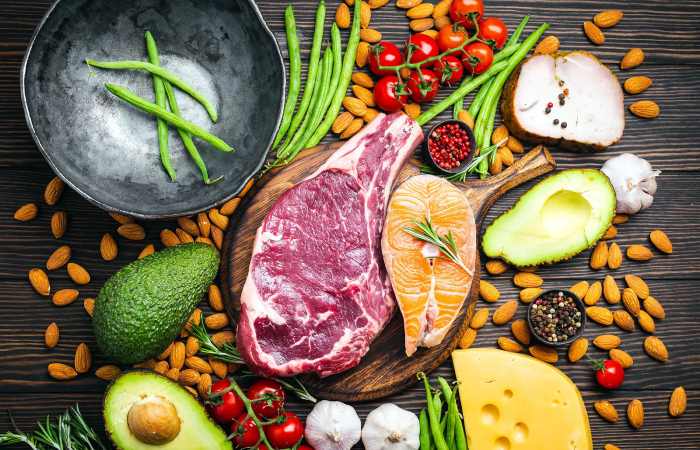
Fats have such a bad reputation that when interested in nutrition, one of the first questions is what lipid macronutrients are and what they are. Lipids or fats are essential for absorbing and synthesizing fat-soluble vitamins, key for different functions. They are also vital to hormone synthesis.
When talking about fat deposits in the body, it is common to think of cellulite and obesity. It is true when it comes to excess fat accumulated in the body. But it is also true that the body needs fat deposits, yes, in adequate quantity. The reason? In addition to the functions already mentioned, these are responsible for protecting different organs of the body and keeping them in place. It is the case of the heart and the liver, among others. So it already gives you a clear idea of the relevance of the role of lipid macronutrients.
How many lipids does an athlete need to ingest, and what type should they be?
Approximately 30% of the caloric intake of a healthy person should correspond to foods rich in lipids. Keep in mind that each gram of lipids equals nine calories. Of course, not all fats are valid for a healthy diet. It would help if you focused your lipid intake on unsaturated fatty acids. And never let more than 50% of them be of animal origin.
Nuts, avocado, salmon, olive oil or tuna are “good” fats.
Now that you know what the macronutrients are and the function of the macronutrients, all you have to do is organize your diet. Calculate what percentage and quantity you need of each of them as a first step to design healthy and balanced menus for athletes.